

Are You “Too Young” for Knee Problems? Why Early Knee Pain Shouldn’t Be Ignored
February 19, 2026
The Modern Resident’s Guide to Lower Back Pain Relief
March 27, 2026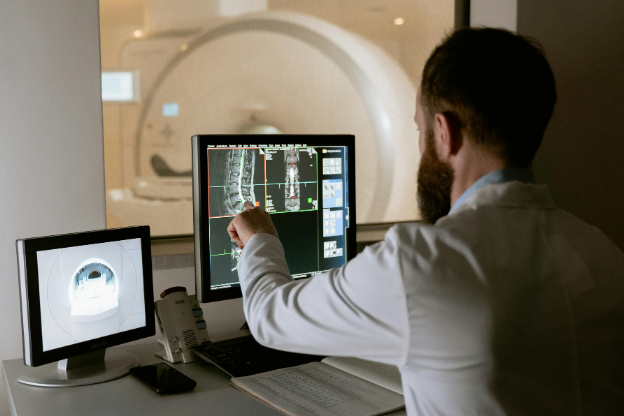
Lower back pain is one of the most common musculoskeletal complaints among adults. When discomfort becomes persistent or severe, many patients assume that an MRI will provide clear answers. While advanced imaging plays an important diagnostic role, it does not always tell the full story. In fact, research consistently shows that MRI findings do not always correlate with the level of pain a person experiences. Understanding this disconnect is essential when seeking effective lower back pain relief in Oak Creek, WI.
Why MRI Findings and Pain Don’t Always Align
Magnetic Resonance Imaging (MRI) provides detailed images of spinal structures, including discs, joints, ligaments, and nerves. It can reveal disc bulges, herniations, degenerative changes, and arthritis. However, these findings are also commonly seen in individuals who report no pain at all.
Age-related changes such as disc degeneration or mild spinal narrowing are often part of the natural aging process. Many asymptomatic adults show these changes on imaging. Conversely, some patients experience significant pain even when their MRI appears relatively normal.
Pain is complex. It is influenced not only by structural abnormalities but also by inflammation, nerve sensitivity, joint instability, muscle dysfunction, and biochemical processes within tissues. An MRI captures anatomy—but not always function or inflammation at a microscopic level.
The Risk of Over-Relying on Imaging
When MRI findings are interpreted without considering clinical symptoms, treatment decisions may focus too heavily on structural abnormalities rather than the true pain generator. For example, a mild disc bulge may be blamed for pain when the real source is facet joint irritation, ligament strain, or muscular instability.
Over-reliance on imaging can lead to unnecessary anxiety for patients or recommendations that may not address the underlying issue. A comprehensive evaluation—including physical examination, movement assessment, and symptom history—is critical in determining the most appropriate course of care.
A Functional Approach to Lower Back Pain
Effective lower back treatment requires more than identifying structural changes. It involves understanding how the spine functions under load, how muscles support movement, and how inflammation contributes to discomfort.
A functional assessment may evaluate:
- Joint mobility and alignment
- Core stability and muscle strength
- Nerve irritation patterns
- Areas of localized inflammation
- Movement mechanics during daily activities
By identifying the true source of pain, providers can design targeted interventions that address root causes rather than simply responding to imaging findings.
Rethinking Treatment Strategies
For many patients, conservative care such as physical therapy, postural correction, and activity modification provides meaningful improvement. However, when pain persists, additional non-surgical options may be considered.
Regenerative medicine has emerged as an innovative approach focused on supporting the body’s natural healing processes. Targeted Regenerative Injections in Oak Creek, WI, are designed to reduce inflammation within spinal joints and soft tissues while promoting healthier tissue function. Rather than masking symptoms temporarily, regenerative strategies aim to improve the environment of injured or irritated structures.
This approach may be particularly valuable when imaging findings are mild, but pain continues to interfere with quality of life. By addressing inflammation and tissue stress directly, patients may experience improved stability, reduced discomfort, and enhanced mobility.
Looking Beyond the MRI
An MRI is a valuable diagnostic tool, but it is only one piece of the puzzle. Pain is a multidimensional experience influenced by both structural and biological factors. A thoughtful, patient-centered evaluation ensures that treatment decisions are guided by clinical findings—not imaging alone.
If you have been told that your MRI “doesn’t look that bad” yet you continue to struggle with persistent discomfort, you are not alone. There are advanced, non-surgical solutions designed to address the underlying drivers of spinal pain and inflammation.
At Regenerative Joint & Spine in Wisconsin, we take a comprehensive approach to spinal health by combining detailed evaluation with advanced non-surgical therapies tailored to your condition. If ongoing lower back pain is limiting your daily life, schedule a consultation to explore personalized treatment options designed to restore comfort, stability, and long-term function.ward lasting relief.